The fourth day of ECO-ENTREPRENEUR focused on leadership, resilience and the long-term sustainability of green initiatives.
By this stage of the Erasmus+ training course, participants had already built a strong group, explored circular economy, developed eco-business ideas and practised communication. Day 4 invited them to go further and ask an important question: what happens when a green project faces real challenges?
The day started with reflection activities on leadership. Participants discussed what leadership means in youth work and sustainable entrepreneurship. The group agreed that leadership is not only about being in charge. It is about taking responsibility, supporting others, making ethical decisions and staying committed to positive change.
A central part of the day focused on the role of the green mentor. Participants explored how youth workers can support young people who want to create environmental or social impact. Mentoring was presented as a process based on listening, asking useful questions, identifying resources and helping young people stay motivated.
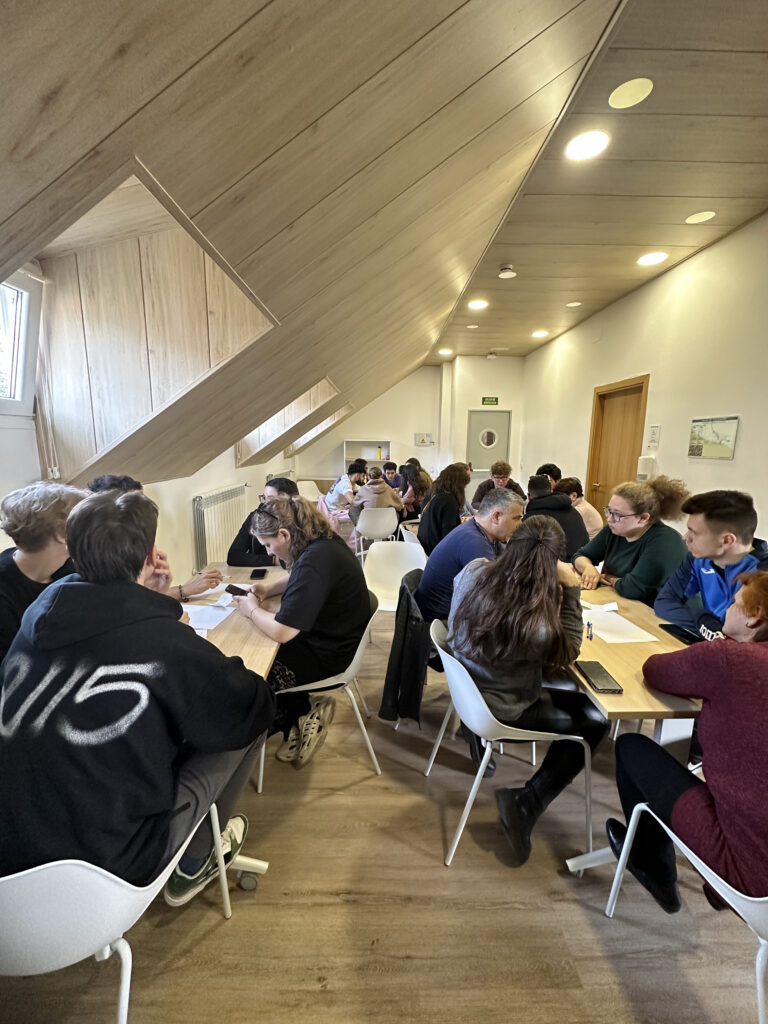
The most powerful activity of the day was a crisis management role-play. Participants worked in teams and faced realistic scenarios that could happen in a green start-up or youth initiative.
The situations included team conflict, lack of funding, communication problems, low community engagement and unexpected barriers. Each team had to analyse the problem, make decisions under pressure and present a response strategy.
This activity helped participants develop key competences such as problem-solving, adaptability, teamwork, emotional control and strategic thinking.
The group then explored how to scale a green initiative. Participants discussed how a local idea can grow while keeping its environmental and social values. The discussion included partnerships, replication, ethical growth, community involvement and the risk of losing purpose when a project expands too quickly.
This was especially relevant for youth workers. Supporting young people does not stop when they create an idea. Young people also need guidance when they face difficulties, adapt their plans or try to reach a bigger audience.
Throughout the day, participants connected the sessions with their local realities. They discussed how youth organisations can support green entrepreneurship through workshops, mentoring, partnerships, community events and follow-up activities.
Day 4 strengthened the strategic side of the project. Participants learned that sustainable entrepreneurship requires more than creativity. It also requires leadership, resilience, planning and the ability to respond to challenges.