Published by: Europe NGO
Welcome, explorers of Europe!
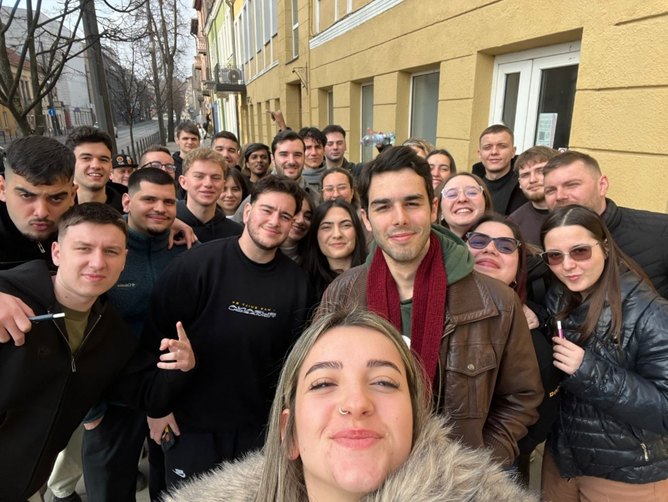
From 16 to 25 March, Europe NGO took part in an inspiring international training course in Kaunas, Lithuania, under the project “Youth Work in AI ERA: Improving Youth Work with AI.” During these days, participants from several European countries came together to explore one of the most transformative topics of our time: Artificial Intelligence and its impact on youth work, education, cooperation, and society.
This experience was much more than a training activity. It was a space for learning, dialogue, intercultural exchange, teamwork, and reflection on how young people and youth workers can use AI in a responsible, creative, and meaningful way. In a world where digital tools are rapidly changing how we communicate, work, learn, and participate in society, projects like this help young Europeans become more prepared, more aware, and more connected.
Youth Work in the AI Era
Artificial Intelligence is no longer a distant concept or a technology reserved only for experts. It is already part of our everyday lives. We use it to search for information, create content, translate languages, organise tasks, support learning processes, and even improve communication between people and organisations.
During the training course, participants explored how AI can be used as a practical tool in youth work. The sessions helped us understand how artificial intelligence can support young workers, educators, volunteers, and youth organisations in their daily activities. AI can help us design better workshops, improve communication strategies, generate educational materials, support project management, and make youth work more accessible and inclusive.
However, one of the most important lessons of the project was that AI should not replace human creativity, empathy, or critical thinking. Instead, it should be understood as a complementary tool that can help us work better when it is used ethically and responsibly.
Learning Through Cooperation and Teamwork
Throughout the mobility, the atmosphere was one of cooperation, harmony, and positive energy. Participants worked together in different non-formal education activities, group challenges, discussions, and workshops. The most valuable part of the experience was not only the technical knowledge acquired, but also the spirit of collaboration that emerged among the group.
The project created a safe and dynamic environment where participants could share ideas, ask questions, test AI tools, reflect on their risks, and learn from each other’s perspectives. This collaborative approach made the experience especially meaningful, because it showed that digital transformation is not only about technology; it is also about people, values, and cooperation.
The activities were designed to be practical, participatory, and accessible. This allowed participants with different backgrounds and levels of previous knowledge to engage with the topic and understand how AI can be applied in real contexts.
Ethical Use of AI: A Key Challenge of Our Time
One of the central themes of the training course was the ethical use of Artificial Intelligence. As AI becomes increasingly present in society, it is essential to understand not only its opportunities, but also its risks.
During the project, participants reflected on issues such as privacy, misinformation, manipulation, fake news, bias, and the responsible use of digital tools. These discussions were especially relevant for youth work, where organisations often work with young people, vulnerable groups, and educational communities.
The training helped participants understand that AI must be used with responsibility, transparency, and respect for human rights. It is not enough to know how to use AI tools; it is also necessary to know when, why, and under what ethical conditions they should be used.
A particularly important part of the learning process focused on fake news and online misinformation. Participants explored how artificial intelligence can sometimes be used to generate misleading content, but also how it can help detect unreliable information when combined with critical thinking and digital literacy. This was one of the most valuable lessons of the project: young people need digital skills, but they also need ethical awareness and the ability to evaluate information critically.
A Window to Europe: Building Networks for the Future
The mobility in Kaunas was also a powerful opportunity to build European networks. During the nine days of activities, participants did not only attend workshops; they created relationships, exchanged ideas, and discovered new possibilities for future cooperation between organisations.
Europe NGO strongly believes that international projects are not isolated experiences. They are starting points for long-term collaboration, mutual understanding, and collective impact. Through this training course, participants were able to connect with young people and youth workers from different countries, creating a valuable network that can support future projects, initiatives, and partnerships.
These European networks are essential for building a more inclusive and cooperative future. They allow young people to understand different realities, share solutions, and work together on common challenges. In this sense, the project was not only about Artificial Intelligence; it was also about European citizenship, solidarity, and the shared responsibility of building a better future.
An Unforgettable Intercultural Experience
One of the most enriching aspects of the project was its intercultural dimension. In addition to the Spanish team, participants from Bulgaria, North Macedonia, Greece, Cyprus, Romania, and Lithuania took part in the mobility. This diversity created an international atmosphere that made the experience even more valuable.
The intercultural evening was one of the most memorable moments of the project. Participants had the opportunity to share traditional food, dances, stories, customs, and cultural elements from their countries. These moments reminded us that Europe is not only a political or institutional project; it is also a community of people, cultures, histories, and shared values.
Through these exchanges, participants learned from each other in a natural and meaningful way. The project showed that intercultural learning often happens not only in formal sessions, but also during conversations, meals, informal moments, and shared experiences.
Bringing the Learning Back Home
After this unforgettable experience in Lithuania, the knowledge acquired will now be transferred to our work as young people, youth workers, volunteers, and active citizens. Participants returned home with new tools, new ideas, and a better understanding of how Artificial Intelligence can be used in youth work.
The project helped us develop practical skills, but also a deeper awareness of the responsibilities that come with the use of technology. We learned how AI can support creativity, communication, learning, and cooperation, but also why it is essential to use it carefully, critically, and ethically.
For Europe NGO, this project reinforces our commitment to promoting European values, digital skills, youth participation, and international cooperation. We believe that young people must be active participants in the digital transformation of society, not passive observers. Projects like this help them gain the confidence, knowledge, and networks needed to become agents of positive change.
Conclusion: The Future Is Collaborative, Digital, and Human
The training course “Youth Work in AI ERA: Improving Youth Work with AI” was a powerful reminder that the future is already here. Artificial Intelligence is transforming the way we live and work, but its real value depends on how we choose to use it.
Thanks to the support of the European Union, young people can participate in these life-changing experiences, develop new competences, build international friendships, and contribute to a more aware, inclusive, and cooperative Europe.
For Europe NGO, this mobility in Kaunas was not only an AI adventure. It was a European journey of learning, friendship, responsibility, and shared purpose.
The future is digital, but above all, the future must remain human.