The third day of ECO-ENTREPRENEUR focused on a key challenge for any green initiative: how to transform an idea into a clear, convincing and realistic project.
After exploring sustainability challenges and circular economy tools, participants moved into the creative and communication phase of the training. The goal was to strengthen their ability to support young people in developing, explaining and testing eco-business ideas.
The day began with a storytelling workshop. Participants explored why stories matter in entrepreneurship, especially when a project has social or environmental impact.
A strong idea is important, but it also needs to be communicated clearly. Young people often have motivation and creativity, but they may struggle to explain their ideas in a structured way. Storytelling helps them present the problem, the solution, the target group and the change they want to create.
Through practical exercises, participants learned how to build a narrative around a green project. They worked on emotional connection, clarity, structure and purpose. This was especially useful for youth workers who will later support young people in workshops, mentoring sessions or local initiatives.
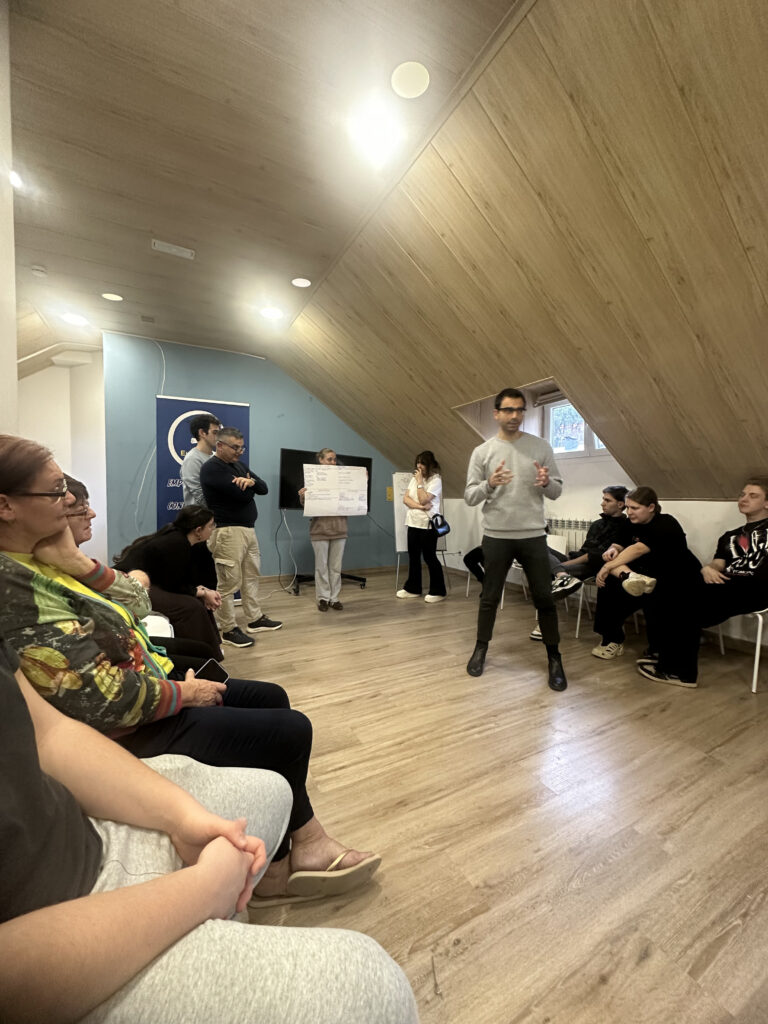
One of the most engaging activities of the day was the Green Shark Tank. Participants worked in groups and presented eco-business ideas to the rest of the group. After each presentation, they received feedback from peers.
The activity helped participants practise pitching, argumentation, active listening and decision-making. It also helped them understand how to assess an idea without discouraging creativity.
The Green Shark Tank was not designed as a competition. It was a safe learning space where participants could test ideas, improve them and learn how to give constructive feedback.
The day also included a session on funding opportunities for sustainable projects. Participants explored different ways to support green initiatives, including European programmes, local funding opportunities, partnerships and community-based resources.
This was important because many young people may have ideas but do not know how to finance or start them. Youth workers need to understand basic funding pathways so they can guide young people more effectively.
In the final part of the day, participants worked on public speaking. They practised voice, body language, structure and confidence. These skills are useful not only for entrepreneurship, but also for facilitation, advocacy, youth participation and community work.
By the end of Day 3, participants had moved from ideas to communication. They had learned how to shape a message, test a concept and support young people in presenting their green solutions with confidence.